2 months 3 weeks ago
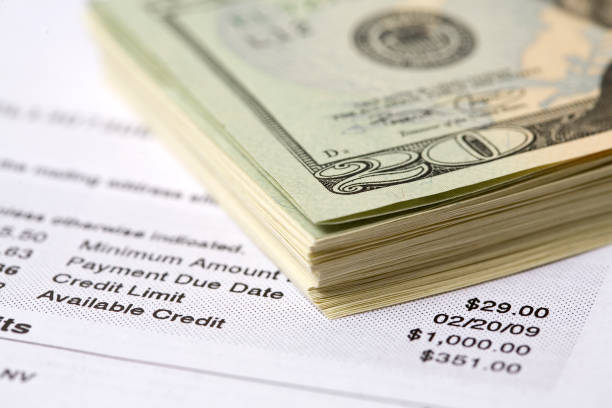
Picture this: you open your credit card statement and see a balance of $2,000. The minimum payment due is just $35. That looks pretty easy, right? You could pay that and barely feel it. But here’s the catch—that $35 barely dents what you actually owe. The rest keeps sitting there, racking up interest every single day. If you only pay the minimum, you’re not really paying off your debt. You’re just feeding the interest monster that lives inside your card. And that monster is very, very hungry.Let’s break it down with real numbers. Say you have a $2,000 balance on a card with a 20% APR. Your minimum payment might be around $35 per month. If you stick to that, it will take you over 10 years to pay off that balance. You’ll end up paying more than $2,200 in interest alone. That’s more than the original amount you owed. Meanwhile, if you skipped that $2,000 purchase and just saved the cash, you’d have everything you needed without giving the bank an extra $2,200. That’s the hidden cost of minimum payments.Now, what happens when you pay more than the minimum? Let’s say you pay $100 a month instead of $35. Suddenly, that same $2,000 balance disappears in about 22 months. You pay less than $400 in interest. That’s a savings of over $1,800. For doing nothing different except paying a little extra each month. That’s not a trick or a loophole. That’s just math. Every extra dollar you put toward your card goes straight to the principal, which is the actual amount you borrowed. The faster you shrink the principal, the less interest gets charged on top of it. It’s like going on a diet where the food you eat stops being replaced by more food. The pile just gets smaller and smaller.But the benefits don’t stop at saving money. Paying more than the minimum also helps your credit score in a few important ways. One of the biggest factors in your score is your credit utilization ratio—that’s the amount of credit you’re using compared to your total credit limit. If your card has a $5,000 limit and you owe $2,000, your utilization is 40%. That’s higher than what lenders like to see. Most credit experts suggest keeping it under 30%, and the lower you go, the better it looks. When you pay more than the minimum, your balance drops faster, which lowers your utilization. A lower utilization can give your score a nice boost over time. That means better chances of getting approved for loans, apartments, or even a new phone plan. And when you do get approved, you’ll likely get better interest rates because you look like a safer bet.There’s also a psychological payoff that people don’t talk about enough. Watching that balance go down faster feels amazing. It’s like seeing the progress on a long hike. If you only pay the minimum, the number barely moves for years, and you start to feel stuck. But when you pay extra, you see real progress each month. That momentum keeps you motivated. You start looking for small ways to free up extra cash—skipping a coffee run, cutting a streaming service you barely use, or selling the stuff you no longer need. Suddenly, paying off debt becomes a game you actually want to win, not a burden you have to drag around.Here’s a simple tip that works for a lot of people: round up your payments. If your minimum is $35, send $50. If it’s $50, send $75. You won’t even miss the extra $15 or $25. But over a few months, that small habit can shave months off your payoff timeline. Another trick is to treat your card like a monthly bill for everything you charge to it. If you buy groceries and gas with your card, add that amount to your payment at the end of the month. That way, you’re not just paying the minimum—you’re paying off what you actually spent. That’s the closest thing to “using a credit card for free” that exists.Now, what if you have multiple cards? That’s okay. Focus on paying more than the minimum on at least one card at a time. Put all your extra cash toward the card with the highest interest rate or the lowest balance—whichever feels more motivating. Just keep paying the minimums on the other cards so you don’t hurt your payment history. Once you knock out one card, roll that extra payment into the next one. That’s how people get out of debt faster than they ever thought possible.The bottom line is simple: paying more than the minimum is not about being rich or having spare cash lying around. It’s about being smart with what you already have. Every extra dollar you send is a vote for your future self. It’s a way of saying that you care more about your long-term freedom than about that small monthly convenience. And the payoff is huge. You save money, you build a stronger credit score, and you feel like you’re actually in control of your finances instead of the other way around. So next time your bill arrives, take a look at the number next to “minimum due.” Then ask yourself how much you can really afford to send. Your future self will thank you.You should check your full credit reports from the three big companies at least once a year. You can get these for free at AnnualCreditReport.com. Think of it as your yearly check-up. For your credit score, which changes more often, checking it once a month is a great habit. Many banks and credit card companies now give you your score for free. Don’t check it every day, though—monthly is often enough to spot trends.
You can find out your score in a few easy ways. Many banks and credit card companies now offer free credit score access right in your online account. You can also use trusted websites like AnnualCreditReport.com to get a free copy of your credit report from each of the three major bureaus once a year. Some services provide your score for free as part of their monitoring. It’s your information, so you have a right to see it!
The biggest risk is not having enough money in your bank account when the payment is taken out. This can cause the payment to fail and lead to fees from both your bank and the company you were trying to pay. To avoid this, always know when the money will come out. Treat it like any other important due date. Keep a cushion of extra money in your checking account as a safety net, and check your balance regularly.
Going over your limit can cause several problems. You might have to pay an expensive over-limit fee. Your card could be declined at the checkout. Most importantly, it can seriously hurt your credit score because it looks like you’re in financial trouble. It’s a signal to lenders that you might be a risky person to lend money to in the future.
Paying off a loan early is good for your wallet because you save on interest, but it can cause a small, temporary dip in your credit score. This happens because closing an account in good standing shortens your credit history length. Don’t let this scare you, though! The dip is usually minor and temporary. The long-term benefits of being debt-free and having a history of on-time payments are much more valuable.