1 month 2 weeks ago
If you’ve ever looked at a credit card bill and felt confused about why the payment deadline seems so far away from the list of charges, you’re not alone. Most people just glance at the “minimum due” and the date, then move on. But the gap between your statement closing date and your payment due date is one of the most useful tools you have for saving money, avoiding penalties, and even boosting your credit score. Understanding that window is simple, and it can completely change how you handle your cards.First, a quick breakdown. Your statement closing date is the last day of the billing cycle. It’s the moment your card issuer takes a snapshot of your balance and sends you a summary of everything you charged that month. This is also the date that gets reported to the three major credit bureaus—Experian, Equifax, and TransUnion. That balance you see on that specific day is what they use to calculate your credit utilization, which is the second biggest factor in your credit score after payment history. So if you want a lower score, max out your card before the closing date. If you want a higher score, pay down your balance before that date, not just on the due date.Now, your payment due date is exactly what it sounds like: the day your payment must be received by the issuer to be considered on time. It’s usually about 21 to 25 days after the closing date. This stretch of time is called the grace period. During this window, you can pay off your entire new balance and avoid paying any interest on your purchases. That’s a huge benefit if you use it correctly. The trick is to realize that you don’t have to wait until the due date to pay. In fact, waiting until the due date might be costing you money if you’re carrying a balance from earlier months.Here’s a common scenario. You get your statement on the 10th of the month, and your due date is the 5th of the next month. That feels like you have plenty of time, so you decide to wait until the 4th to make a payment. But if you’re carrying a balance from previous months, new purchases after the statement closing date still start accruing interest right away. The grace period only applies to new purchases if you pay the previous statement balance in full. So by waiting, you’re not just making a payment—you’re letting interest build daily on those new charges. The solution is to make two payments a month: one a few days before the due date to cover the prior statement, and another a few days before the closing date to keep your balance low for the credit bureaus.That second payment is the secret sauce. Let’s say your closing date is the 15th. If you make a payment on the 14th that brings your balance down to, say, 10% of your credit limit, that low balance is what gets reported. Even if you spend heavily later in the month, your utilization looks great on paper. Your credit score rewards that, and you don’t have to change your spending habits at all—just your timing.Another practical use of the gap between the two dates is aligning your due date with your paycheck. Most issuers let you change your due date, which shifts your closing date too. If you get paid on the 1st and the 15th, set your due date for the 3rd or the 17th. That way, you’re not scrambling to find money right before a payment is due. You can schedule an automatic payment for the day after each payday, and you’ll never be late. Late payments stay on your credit report for seven years, and a single one can drop your score by 50 points or more. So setting up this simple alignment is one of the smartest moves you can make.Finally, understand that the due date is not a suggestion. If your payment is received even a few minutes after the cutoff time, it counts as late. Many issuers allow a grace period of one or two days for first-time offenders, but don’t rely on that. The safest approach is to pay at least a week early, or schedule automatic payments to clear a few days before the due date. Check your issuer’s cutoff time—some are 5 p.m. Eastern, others are midnight. Knowing that specific time protects your credit score and your wallet.The bottom line is this: your statement closing date and your payment due date work together, but they serve different purposes. One decides what your credit utilization looks like to lenders. The other decides whether you’re on time or not. If you pay attention to both, you’ll avoid interest, dodge late fees, and watch your credit score tick upward. All it takes is a calendar reminder and a little bit of planning.You can find out your score in a few easy ways. Many banks and credit card companies now offer free credit score access right in your online account. You can also use trusted websites like AnnualCreditReport.com to get a free copy of your credit report from each of the three major bureaus once a year. Some services provide your score for free as part of their monitoring. It’s your information, so you have a right to see it!
Your credit score matters more now because you’re likely making big financial moves. Think about applying for a mortgage, getting a lower rate on a car loan, or even starting a business. A great score saves you thousands of dollars in interest. It can also affect things like insurance rates. In middle age, you have a long credit history, which is powerful. Protecting that long, good history is key to keeping your financial options wide open and affordable.
The most important lesson is what changes your score. Your bank’s tool often lists the main factors helping or hurting you. Look for things like “paying bills on time” or “low credit card balances.“ This tells you exactly what to work on. For example, if it says “high balance on your credit cards,“ you’ll know that paying those down is your fastest way to a better score. It turns a confusing number into a simple to-do list.
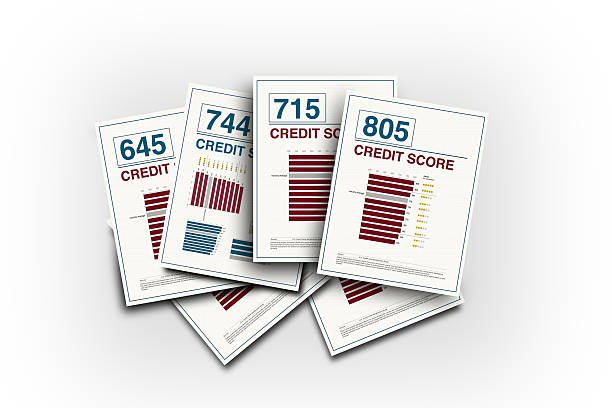
Think of your credit score as a school grade for how you handle borrowed money. It’s a three-digit number, usually between 300 and 850, that lenders check before they decide to give you a loan or credit card. A high score tells them you’re reliable and pay bills on time. This can help you get approved easier and get better deals, like lower interest rates, which saves you a lot of money over time. In short, a good score opens doors and saves you cash.
It probably is! Scammers often use high-pressure tactics, saying you must act “right now” for a special deal. They might offer a guaranteed, super-low interest rate or a pre-approved loan with no credit check. Legitimate lenders always check your credit. Take a deep breath and slow down. Do your own research on the company. A real opportunity will still be there after you’ve had time to think it over.